
EDITORIAL: Stop Bullying
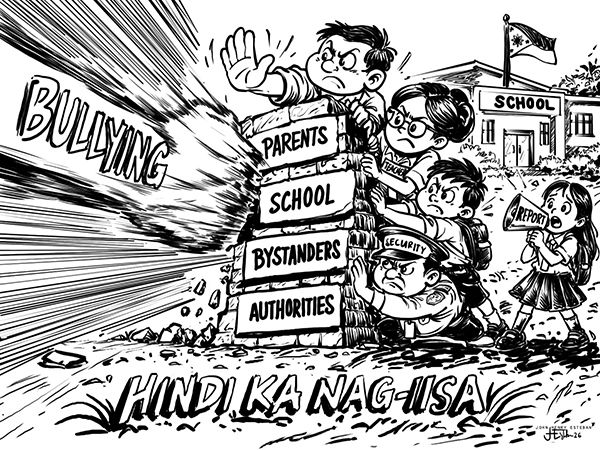
Bullying is often dismissed as a normal part of growing up—a rite of passage that children are expected to endure. It is not. When bullying leads to fear, humiliation, physical injury or, worse, death, it becomes a serious threat to the safety and well-being of children.
The recent Anti-Bullying Information Workshop at Bagong Tanyag Integrated School in Taguig City underscores an important message: children who are bullied should not be left to fight their battles alone. As Justice Undersecretary Ian Norman Dato put it, victims should not seek retribution on their own but should turn to persons in authority or other responsible adults.
This is particularly important at a time when reports of violence in schools are becoming increasingly disturbing. The reported shooting incidents involving students—and the claim of one suspect that his act was in retaliation for bullying—should serve as a wake-up call. Bullying, if ignored or inadequately addressed, can have consequences far beyond hurt feelings or bruised egos.
But the responsibility for stopping bullying does not rest on schools alone.
Teachers, guidance counselors and school administrators must remain vigilant and responsive. Parents, too, must be proactive. They should know the warning signs of bullying, listen to their children and intervene before the situation escalates. Waiting until a child has already suffered serious harm is not responsible parenting.
Equally important is the role of bystanders. Bullying is not merely a confrontation between a bully and a victim. There are often classmates and other people who witness what is happening. Their silence can allow the abuse to continue. They should be encouraged—and given safe ways—to report incidents and help protect those being victimized.
The Anti-Bullying Act of 2013 also makes clear that a school's responsibility does not simply end at its gate. Bullying committed within a two-kilometer radius of a school may still fall within the school's responsibility to act upon. This recognizes a basic reality: children do not stop being students when they leave the school premises.
There must therefore be a sustained, proactive campaign against bullying—not just seminars held after a tragedy or during an awareness month.
Children need to know that reporting bullying is not cowardice. Seeking help is not weakness. And fighting back is not the only way to reclaim one's dignity.
Schools and parents must create an environment where children can confidently say they are being bullied and know that adults will listen and act. Bystanders must be taught that protecting a victim is an act of courage. Authorities must ensure that complaints are taken seriously and addressed promptly.
Most importantly, society must reject the notion that bullying is simply something children have to endure.
“Hindi ka nag-iisa.” You are not alone.
That assurance must be more than comforting words. It must be backed by adults, institutions and communities willing to stand with every child who needs protection.
No child should have to suffer in silence—and no child should have to seek justice alone.


Comments