
Leni lauds Marcos administration’s projects, assistance to Naga ahead of SONA
- 4 days ago
- 3 min read
By Rhadz Barcia
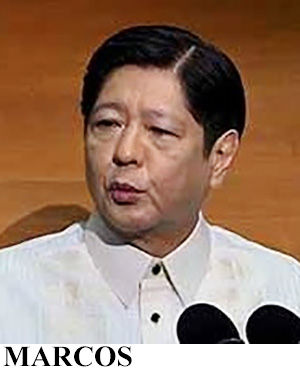
DAYS before the State of the Nation Address (SONA) of President Ferdinand R. Marcos Jr., former Vice President and now Naga City Mayor Maria Leonor “Leni” Robredo praised several programs and projects of the Marcos administration, particularly those benefiting Naga City.
Speaking to reporters in an interview, Robredo said she looks forward not only to hearing the President’s accomplishments over the past year but also his priorities and programs for the remainder of his term.
She emphasized that the national government has implemented several significant initiatives in Naga City, although many residents remain unaware of them.
“Yon hinihintay natin, ‘yong report ng mga ginawa ng government in the past. We are interested in the President’s programs and projects in the next two years. Many don’t know that Naga is the recipient of many programs of the government,” Robredo said.
Robredo cited the national government’s housing initiatives through the Department of Human Settlements and Urban Development (DHSUD), including the Rental Housing and Modular Shelter Unit programs. She also highlighted the Department of Public Works and Highways’ (DPWH) Oplan Kontra Baha, under which Naga City was selected as the pilot area for the flood-control program.
She noted that flooding remains one of Naga’s most pressing concerns, not only because of its rapid urbanization but also because the city serves as a catch basin for floodwaters from surrounding municipalities.

“Madami din ang hindi nakakaalam na marami ang ginagawa ng pamahalaan. Halimbawa ang Naga, marami tayong programa. Ginawa tayong pilot ng DPWH sa Oplan Kontra Baha. Malaking problema ng Naga ang baha. Sa housing, ang dami nating nakuha sa DHSUD because malaki ang problema natin sa housing because of urbanization. Parang pinalaki ng government ang LGSF coverage,” Robredo said.
(Many people are unaware of the numerous initiatives the government is undertaking. Take Naga, for instance—we have many programs. We were selected by the DPWH as a pilot area for Oplan Kontra Baha because flooding is a major concern in the city. We also secured substantial housing assistance from the DHSUD because urbanization has created a significant housing shortage. It also appears that the government has expanded the coverage of the Local Government Support Fund.)
Looking ahead, Robredo expressed hope that the national government would further expand the coverage of the Local Government Support Fund (LGSF).
She said the broader implementation of the program has made government assistance more accessible to local government units.
“Sana naagahan ang pag-launch ng LGSF. Parang pinalaki nila ang LGSF. Dati kasi ang hirap mag-apply, mahirap mag-access,” Robredo said.
(I wish the expanded LGSF had been launched earlier. It seems they have broadened its coverage. Before, it was difficult to apply for and access the program.)
Among the initiatives she cited was the LGSF, under which barangays reportedly receive at least P200,000 annually. According to Robredo, P100,000 may be used for operational requirements, including sound systems, closed-circuit television (CCTV) cameras, and solar panels, while the remaining P100,000 is intended to support five graduating college students selected as presidential scholars.
Robredo also said Naga City received P32 million in rice assistance through the LGSF, which will be distributed to low-income families.
“Sobrang laking bagay ang innovation na ‘to. To make LGSF more accessible to all LGUs kasi ang daming pangangailangan ng LGUs,” Robredo said.
(This innovation is a big help because it makes the LGSF more accessible to all local government units, which have many needs.)
She added that wider access to the LGSF has enabled local government units to implement projects and deliver assistance more effectively.
“Ang wish namin sana lalo pa itong mag-expand, lalo sa mga hirap na lugar. Sana mabigyan ng mas malaking share sa LGSF kasi sila ang dependent sa national government,” Robredo said.
(We hope the program expands further, especially to areas facing greater challenges. We also hope they receive a larger share of the LGSF because they are more dependent on the national government.)
On February 21, 2026, President Marcos visited Naga City to inspect the DPWH’s Oplan Kontra Baha flood-control projects, during which he announced that Naga would serve as the pilot area for the initiative.
Robredo, who ran against Marcos in the 2022 presidential election, accompanied the President during the inspection of Sagop Creek in Barangay Triangulo.
During the visit, Marcos emphasized that his trip to Naga was focused on strengthening public service and disaster resilience in the Bicol Region, one of the country’s most disaster-prone areas, rather than on politics. He also reiterated the national government’s commitment to long-term flood mitigation efforts in the region.


Comments