
NIA turns over P50-M irrigation systems in Masbate
By Ernie Delgado
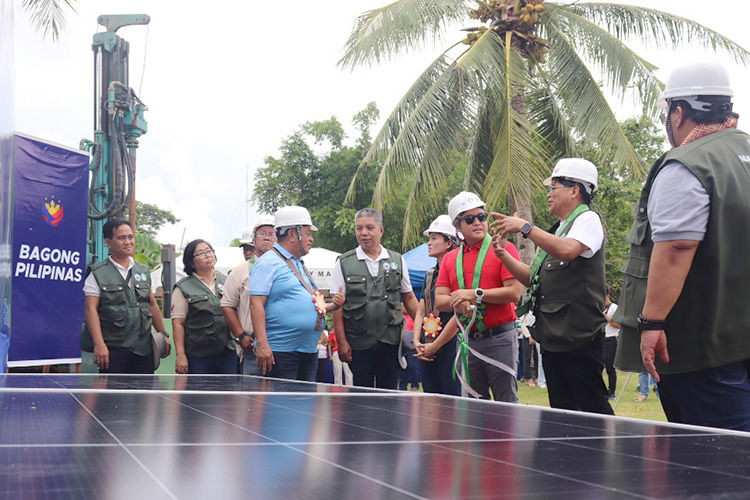
MASBATE CITY --- The National Irrigation Administration (NIA) recently handed over P50 million worth of communal irrigation systems to irrigators’ associations in Masbate province.
This initiative aims to ensure a reliable water supply and enhance land cultivation for farmers in the island province.
In his speech during the turnover ceremony Monday last week, NIA Administrator Eduardo Eddie Guillen highlighted that these projects align with President Ferdinand R. Marcos Jr.’s vision of strengthening farmers’ livelihoods and boosting the agricultural sector in the country.
“These projects will provide farmers with the opportunity to cultivate their lands for two seasons or more, increase rice production in the province, and further improve the living conditions of farmers in Masbate,” NIA Regional Manager Gaudencio John De Vera added.
In an interview following the project turnover, Ariel Marco, chief of the NIA Masbate Sub-office, said that these initiatives aim to enhance irrigation services for over 220 hectares of rice fields across the municipalities of Dimasalang, Balud, Mandaon, and San Jacinto on Ticao Island.
Marco explained that the projects involve the installation of solar-powered pumps and a canalization initiative, which includes the Balantay Solar-Powered Irrigation Project (SPIP) in Dimasalang, the Mambog SPIP and Alas Communal Irrigation Project (CIP) in Mandaon, the Pulanduta SPIP in Balud, and the Puro SPIP in San Jacinto.
The implementation of these solar-powered pump irrigation projects is part of the agency’s strategy to adapt to climate change while harnessing renewable energy sources aimed at advancing irrigation development and enhancing agricultural modernization, he said.
Guillen noted that by utilizing solar energy, farmers can significantly reduce irrigation costs and navigate the challenges posed by climate change.
“The system is not only environmentally friendly but also cost-efficient, reliable, and sustainable,” he remarked.
The island province has faced longstanding challenges in cultivating its agricultural lands. Due to a scarcity of surface water sources, farmers have generally been able to grow rice only in the wet season.
With the introduction of solar-powered irrigation systems, farmers will have the opportunity to cultivate their fields in both growing seasons.
This change is expected to enhance rice production in the province and further improve the living conditions of farmers in Masbate, said De Vera. (PIA Bicol/Masbate)


Comments